
The Art of Consumption: The Virgil Abloh: The Codes Exhibition
When I enter an exhibition, there are usually a few things I tend to notice first - the atmosphere, the works themselves, and the people moving through the space. The Virgil Abloh: The Codes exhibition included them all, so why did I still feel as if I was stepping into a shopping mall?
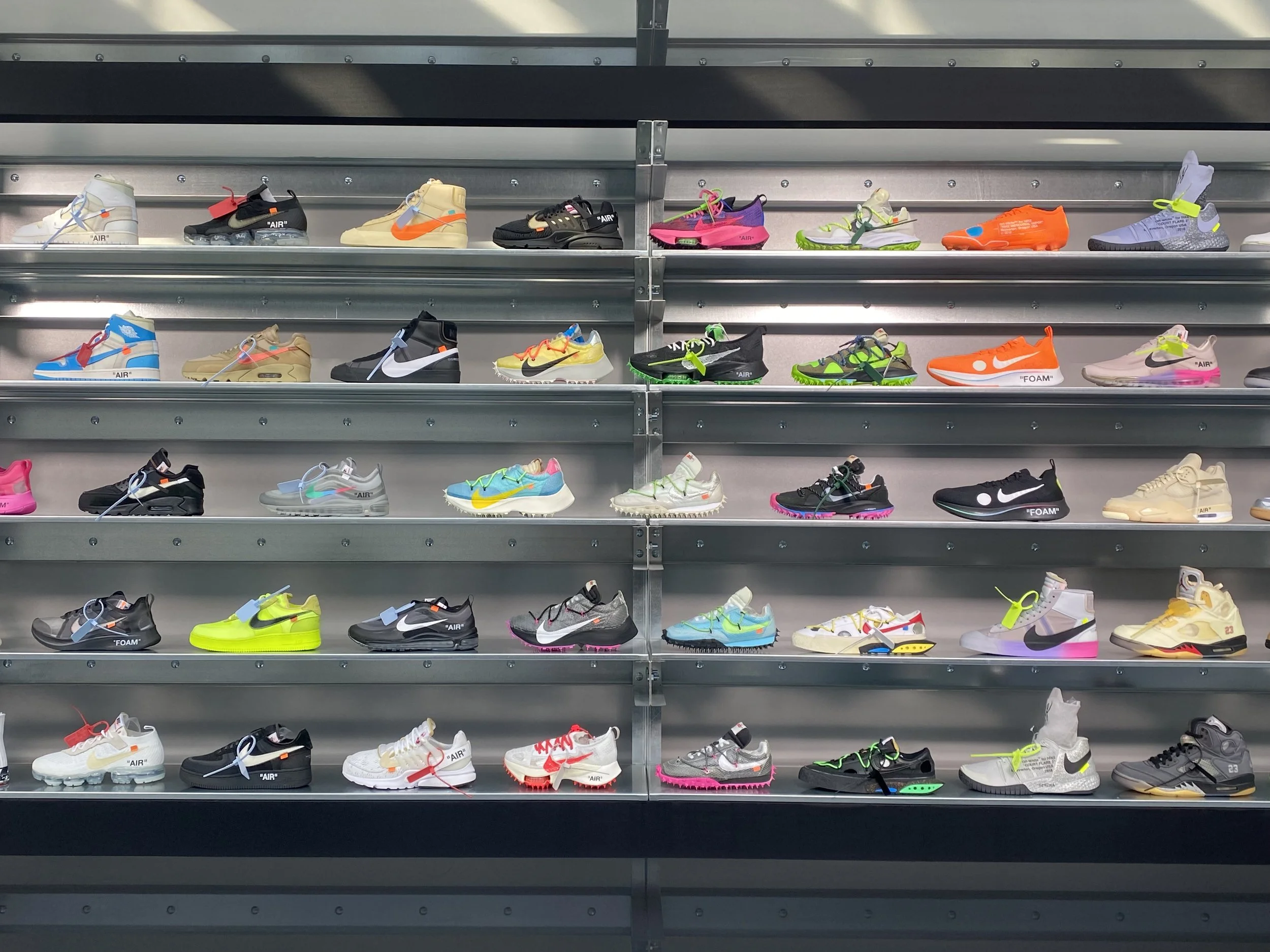
Virgil Abloh: The codes exhibition, 09. oktober 2025, Foto: Hedda Bleken
Virgil Abloh (1980-2021) was an American designer, artist and creative director known for blurring the boundaries between fashion, art, music and design. Trained as an architect, he rose to fame as the founder of Off-white and later as the artistic director of Louis Vuitton´s menswear, here being the first black designer to hold this position. His work is a combination of streetwear aesthetic and luxury craftmanship; turning everyday objects into cultural statements. At the Grand Palais Éphémère in Paris, over 700 objects from Abloh´s archives were presented as a homage to his - unfortunately short – life, and influence. Here his creative process is revealed, and the “codes” that shaped his universe of creation.[1]
Personally, not having any real connection to what I once thought of as a “hypebeast” culture, I was taken aback to see these objects displayed in a museum setting. A silver Louis Vuitton bag, countless Nike sneakers, rows of Pioneer decks and DJ-mixing tables - all arranged with the same respect and honour usually reserved for sculptures or paintings. In many ways it felt less like a retrospective of an artist and more like a glamorous showroom of cultural capital, where style, sound, and status were on equal display. When I entered the museum gift shop after walking through the exhibition, the feeling didn’t fade, if anything it intensified. Surrounded by books, tote bags, and limited-edition merchandise, I felt an unexpected urge to buy something, as if purchasing an object might allow me to take a fragment of the experience with me. It seemed like an intentional continuation of the exhibition itself - a space where the act of consuming became part of the artwork.
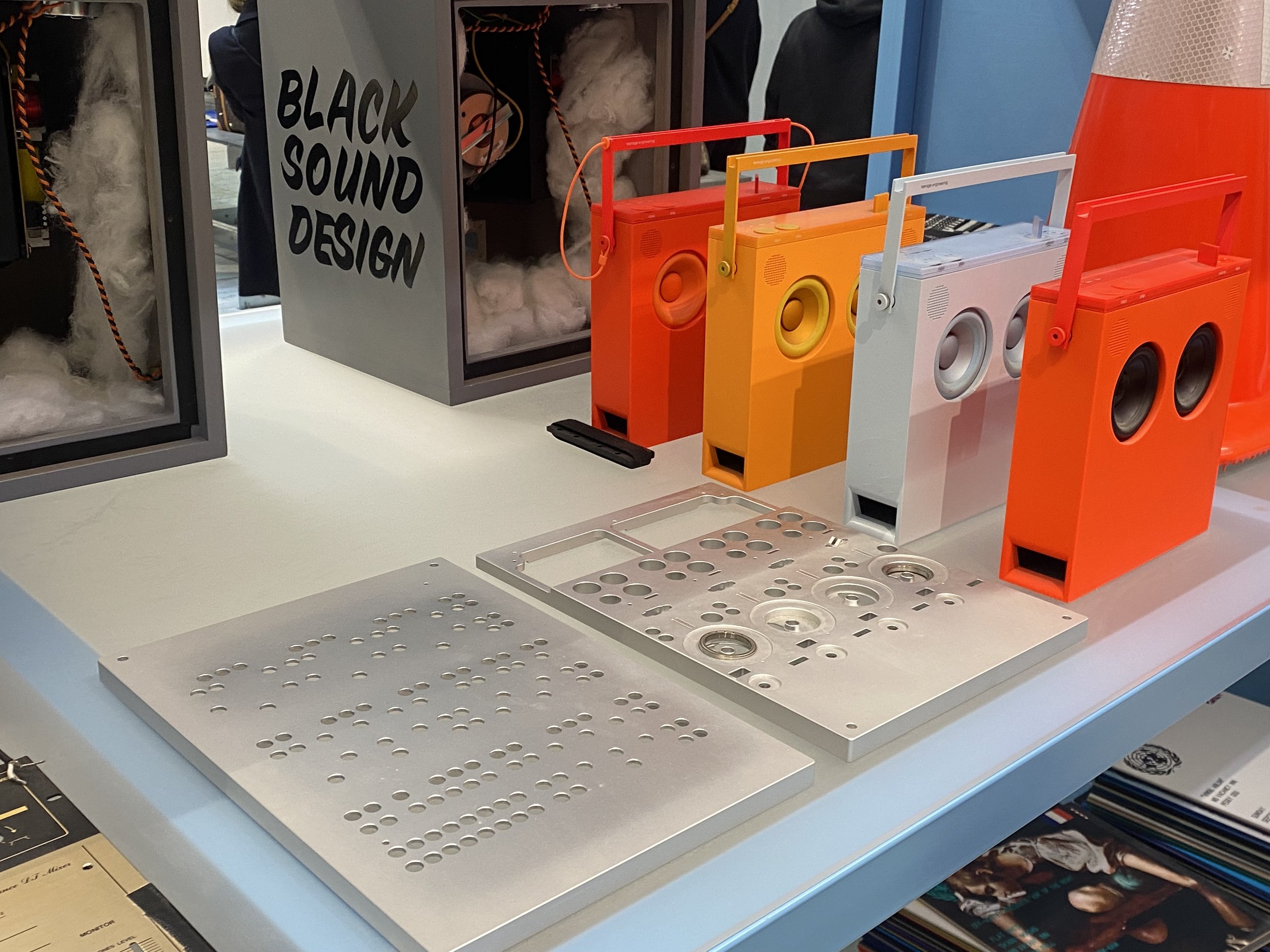
Virgil Abloh: The codes exhibition, 09. oktober 2025, Foto: Hedda Bleken
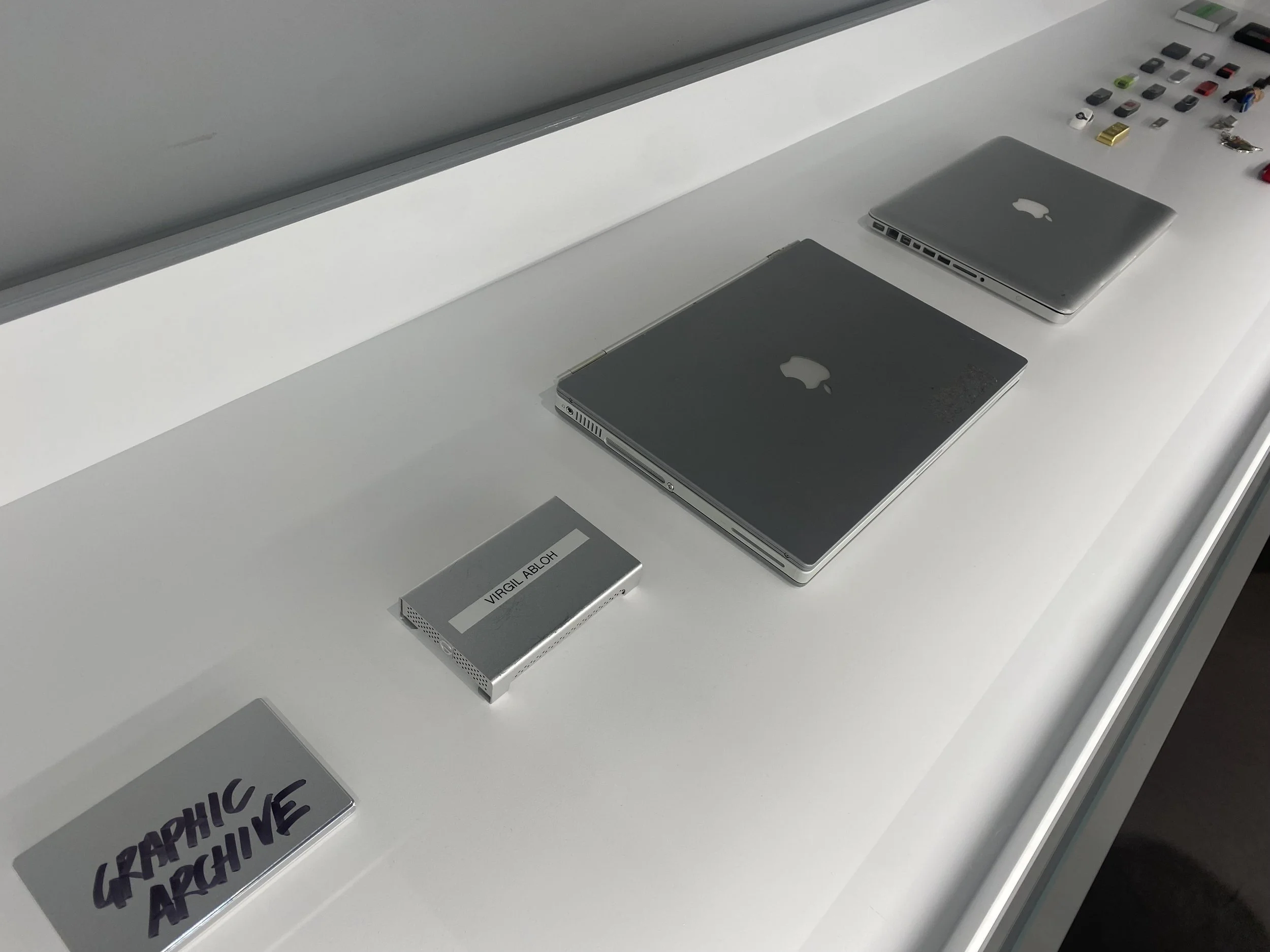
Virgil Abloh: The codes exhibition, 09. oktober 2025, Foto: Hedda Bleken
Maybe part of my scepticism came from what I used to associate with these items. In my teenage years, I remember the boys in my class obsessing over each new sneaker drop, and proudly showing off anything they managed to get from Abloh’s collections. Back then, I thought of it as a shallow kind of consumerism - about logos, resale prices, and “hype”. Seeing these same objects now framed behind glass and celebrated as cultural artifacts felt strange, as if a whole subculture had been canonized overnight without my knowing.
This marks an interesting shift in the art world - one where fashion has become a central player in the art market rather than a parallel industry. What was once dismissed as commercial or decorative objects, are now treated as cultural production with artistic and monetary value. Luxury houses collaborate with artists, fashion shows are staged like performance art, and museum retrospectives of designers now attract the same critical attention as those of painters or sculptors. It is as if fashion collections are the new salon paintings. The boundaries that once separated fashion from fine art seem to have dissolved, replaced by a shared logic of branding, spectacle, and scarcity.
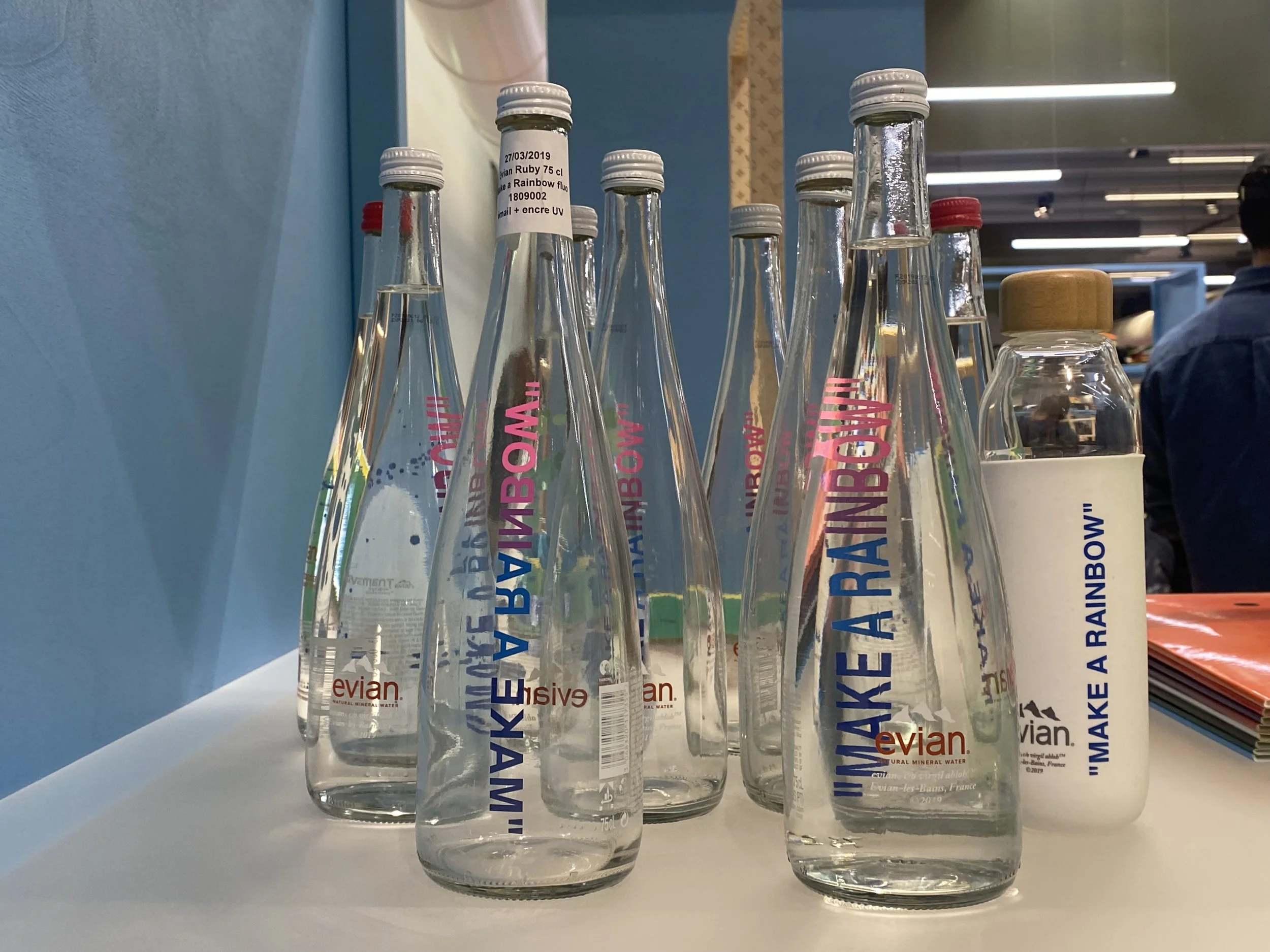
Virgil Abloh: The codes exhibition, 09. oktober 2025, Foto: Hedda Bleken
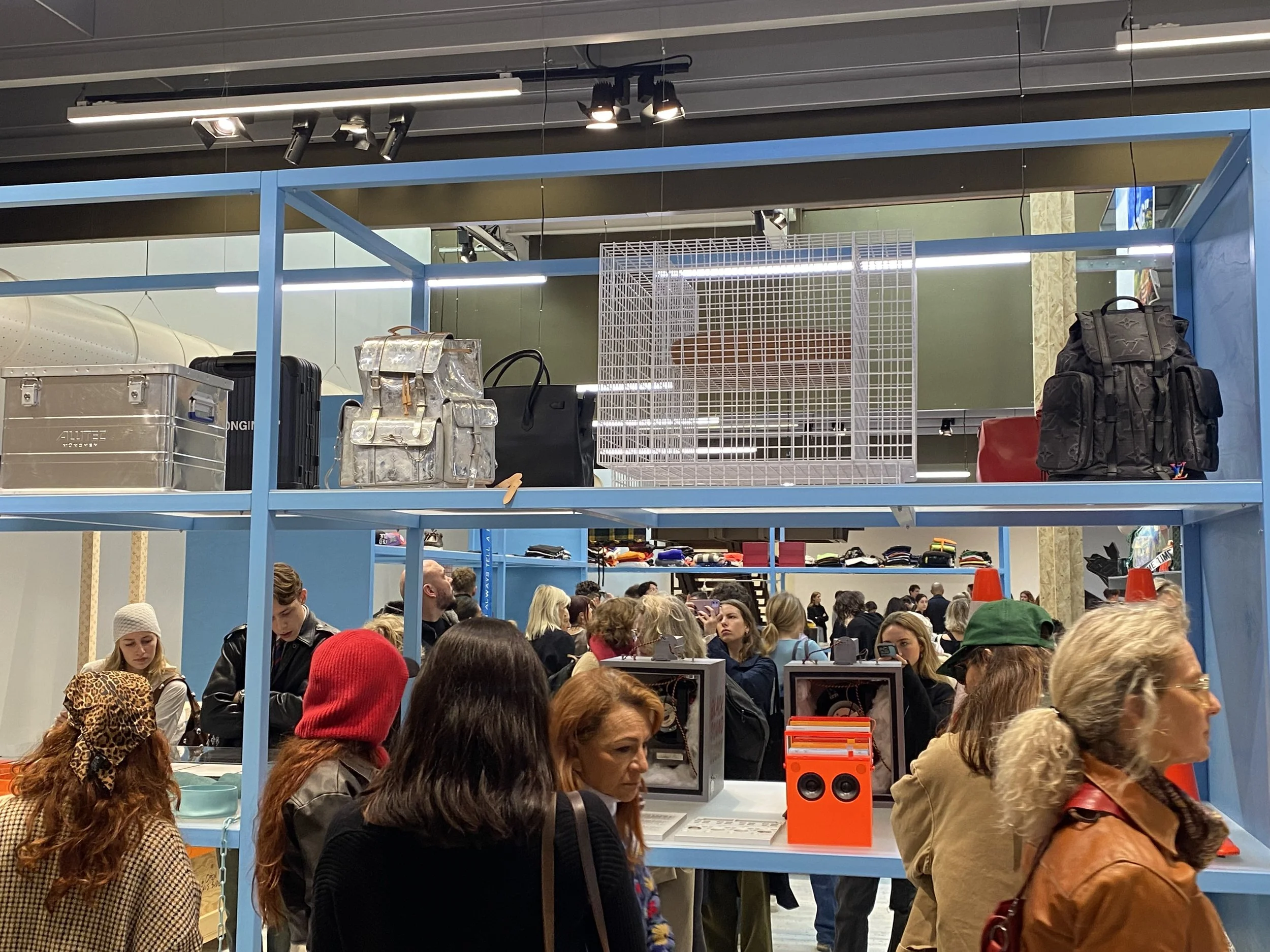
Virgil Abloh: The codes exhibition, 09. oktober 2025, Foto: Hedda Bleken
As Sarah Thornton observes in Seven Days in the Art World, the value of art is maintained through a complex network of institutions like auctions, biennales and studio visits, all of which transform creativity into cultural capital.[2] In many ways, The Codes mirror this structure. The luxury brand becomes the gallery, the fashion drop becomes the auction, and the sneaker becomes the collectible. Abloh’s world operates by the same mechanisms of hype, scarcity, and visibility that Thornton identifies in the contemporary art market, revealing how fashion has not only entered the art world but reshaped its economy from within.
Leaving the exhibition, I couldn’t decide whether I had just witnessed a museum show or a cultural phenomenon. Maybe both. What became clear was how Abloh’s vision has completely reshaped the boundaries of art. His work refuses the idea that fashion exists apart from the art market – instead it thrives within it, exposing how desire, design and consumption now circulate through the same system.
As I walked out, I realized that maybe my classmates at the time were simply ahead of me in understanding where the market, and culture itself was headed.
The exhibition lasted from September 30´th - October 9´th.
Litterature
[1] Grand Palais. “Virgil Abloh: The Codes.” Accessed October 14, 2025. https://www.grandpalais.fr/en/program/virgil-abloh-codes.
[2] Thornton, Sarah. Seven Days in the Art World. New York: W. W. Norton & Company, 2008. s. 6-7.