
Sugarcoating Undone
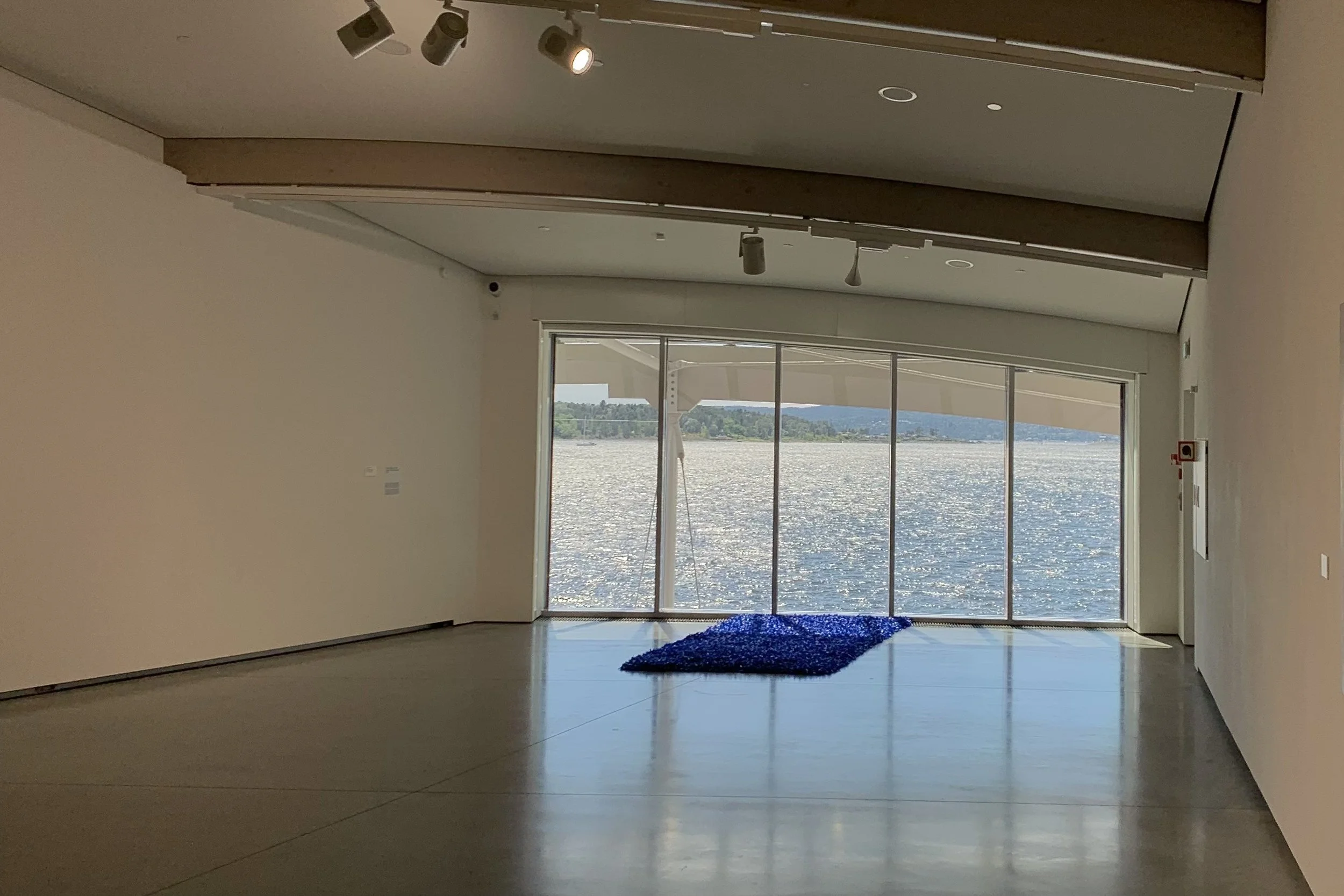
Félix González-Torres, “Untitled (Blue Placebo)” (1991), candies in blue wrappers, endless supply, ideal weight: 130 kg, overall dimensions vary with installation. Foto: Katarina Snoj
Félix González-Torres: “Untitled” (Blue Placebo), 1991
Astrup Fearnley Museet
Exhibition: Astrup Fearnley Collection
The piece rests upon the floor at the second level of the Astrup Fearnley Museet, seemingly slightly detached from the other works comprising the exhibition. Shaped in a parallelogram by the window, the form suggests a subtle sense of movement. The pseudo-duration of the work is conditioned by the visitors, encouraged to take a piece of the candy. The spill consists of 130 kilograms of the latter, wrapped individually in a pulsing blue wrapper, in the distinct minimalist visual vocabulary of the Mexican artist Félix González-Torres. The sheer appearance doesn’t really shock the eyes. Affirmed by the art world and the general public, especially embraced by the LGBTQ+ community, González-Torres’s artistry served as an advocate for HIV sufferers, and of protest against the established structures surrounding the social, political, and personal dimensions of the AIDS epidemic especially in the USA. Partnership, same-sex love, desire, and loss appear as leitmotifs in his work.
“Untitled” (Blue Placebo) is one of the twenty ‘candy works’ he made between 1990 and 1993. The same year this particular candy spill was created, his life partner, Ross Laylock, died of complications of AIDS related causes. In the same vein, the artist succumbed to the illness only five years later. We rightfully have the basis to claim that his works stemmed from his rather private life – the concepts of his works are therefore linked to the most intimate personal experiences which serve as a mode of explanation, in order for the viewers to make sense of them.
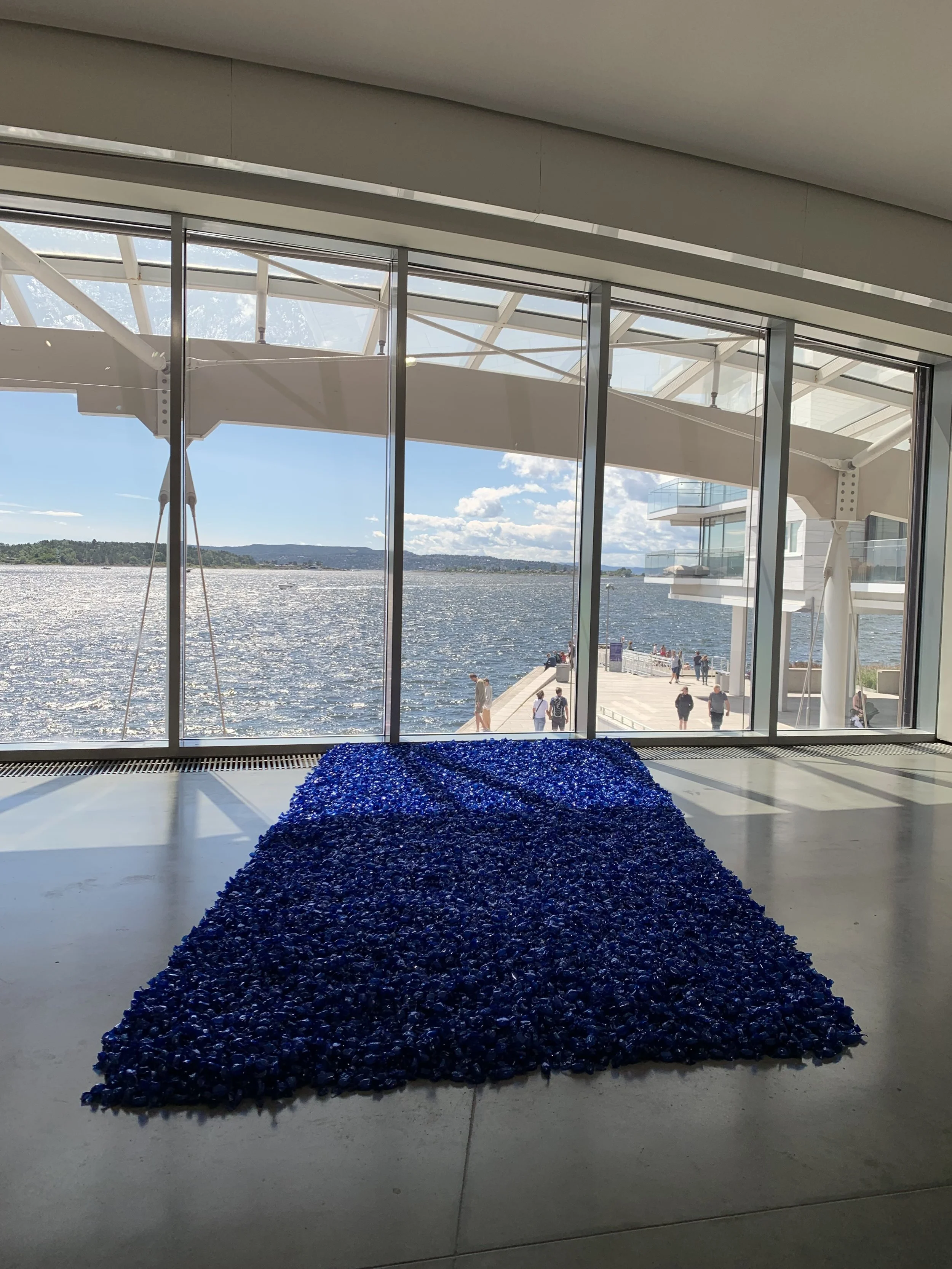
Félix González-Torres, “Untitled (Blue Placebo)” (1991), candies in blue wrappers, endless supply, ideal weight: 130 kg, overall dimensions vary with installation. Foto: Katarina Snoj
González-Torres had once stated that the primary audience of his work was indeed Ross. The artist stressed that his works need an audience, albeit extending beyond his partner to the general public. The former has paved the grounds for the artists of relational aesthetics, by the words of the French curator Nicholas Bourriaud, who established the term. González-Torres argued for Brecht’s theory of Epic Theatre where the audience – in his case the viewers – would have individualized and divergent interpretations of the work that would lead them to take social action, moreover effect change in the world. As the artist said: "Without the public these works are nothing. I need the public to complete the work. I ask the public to help me, to take responsibility, to become part of my work, to join in."[1] It seems as quite a broad and valiant claim, which might indeed be aligned with the permissive premise of the work. The participatory nature of the work makes the consumers the activators; it addresses the homogenous presumably affirming public. Although the act of taking a piece of candy might seem appealing and fun, I would argue that the merit lies in projecting a profound lived-through experience on the viewer and holding space for them to experience it.
It is essential to reference the work “Untitled (Portrait of Ross in L.A.)”, another candy pile, where the artist deliberated the ideal weight – implying the healthy weight of the figurant. With the audience’s help, the artist refers to his partner’s body decaying as it was succumbing to the illness. Becoming less and less. “I would say that when he was becoming less of a person I was loving him more. Every lesion he got I loved him more,” the artist said in an interview with Ross Bleckner[2].
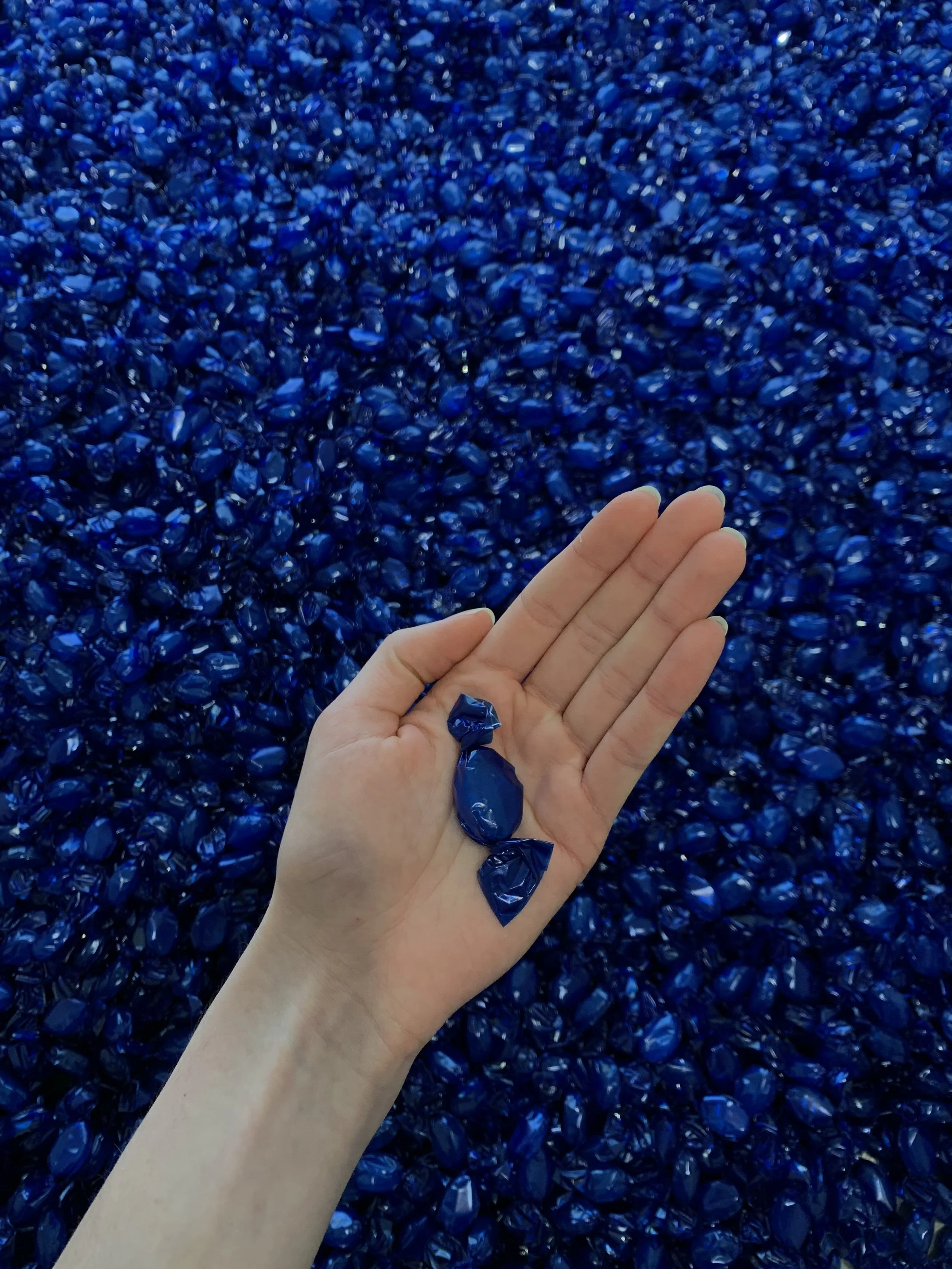
Félix González-Torres, “Untitled (Blue Placebo)” (1991), candies in blue wrappers, endless supply, ideal weight: 130 kg, overall dimensions vary with installation. Foto: Katarina Snoj
González-Torres was diagnosed with AIDS in 1988 too, respectively. The reified backdrop of “Untitled (Blue Placebo)”might therefore refer to the sameness of the pair’ circumstances. The persisting slow burner that had a guaranteed clear ending in the 90s. As González-Torres once said, his work is much about “the daily dealing with events, and objects that form, transform, and affect my positioning”[3]. The work obtains the potential for valorizing the private moments, especially those that happen between the two. The former are counted in real life differently to the sweet pieces in the work which gets disseminated, depleted but replenished over time. I find the fact that the work, although sweet on paper and beguiling with that, obtains the potential to make one oscillate between debilitating rumination and in contrast feel the respite to have someone there to experience the everyday hardship with, anything but lukewarm.
Taking a piece of candy isn’t what’s striking. Besides, it doesn’t necessarily impose the aforementioned responsibility upon the viewer, and with that facilitate a more placid and harmonious future. What it does is that it reveals the private and mends the personal with the political. The work seems to be melancholically withstanding being disjoined by the viewers. Conveying the lived-through reliance on placebo, to sustain what persists. It provides opacity to the concept of temporalness distilled in the candy bits which can’t be downplayed and sugarcoated. It retains the potential to offer the viewer a heightened awareness of self. Meaning, time is not a given, but a gift.
Litterature:
[1] Roberts, Adrienne Skye. 2009. ““Without the public these works are nothing,” participating with Felix Gonzalez-Torres” openspace. https://openspace.sfmoma.org/2009/08/without-the-public-these-works-are-nothing-participating-with-felix-gonzalez-torres/
[2] Bleckner, Ross. 1995. “Interview: Felix Gonzalez-Torres by Ross Bleckner.” Bomb Magazine. https://bombmagazine.org/articles/1995/04/01/felix-gonzalez-torres/
[3] Trippi, Laura. 1998. “The Workspace: Felix Gonzalez-Torres”. In The New Museum of Contemporary Art. 16 Sep. – 20 Nov. New York.