
A few months ago my friend jokingly made a remark on the fact that I have managed to pick the worst possible time of year to go on an exchange study program. The bridge between the warm and cold seasons is pleasant, however, with my destination being a Nordic country, I grew more wary as time passed. Short winter days and lack of vitamin D might be a problem for the future, but for now it made me more aware of changes happening around me and the experience of disappearing into an unfamiliar environment.
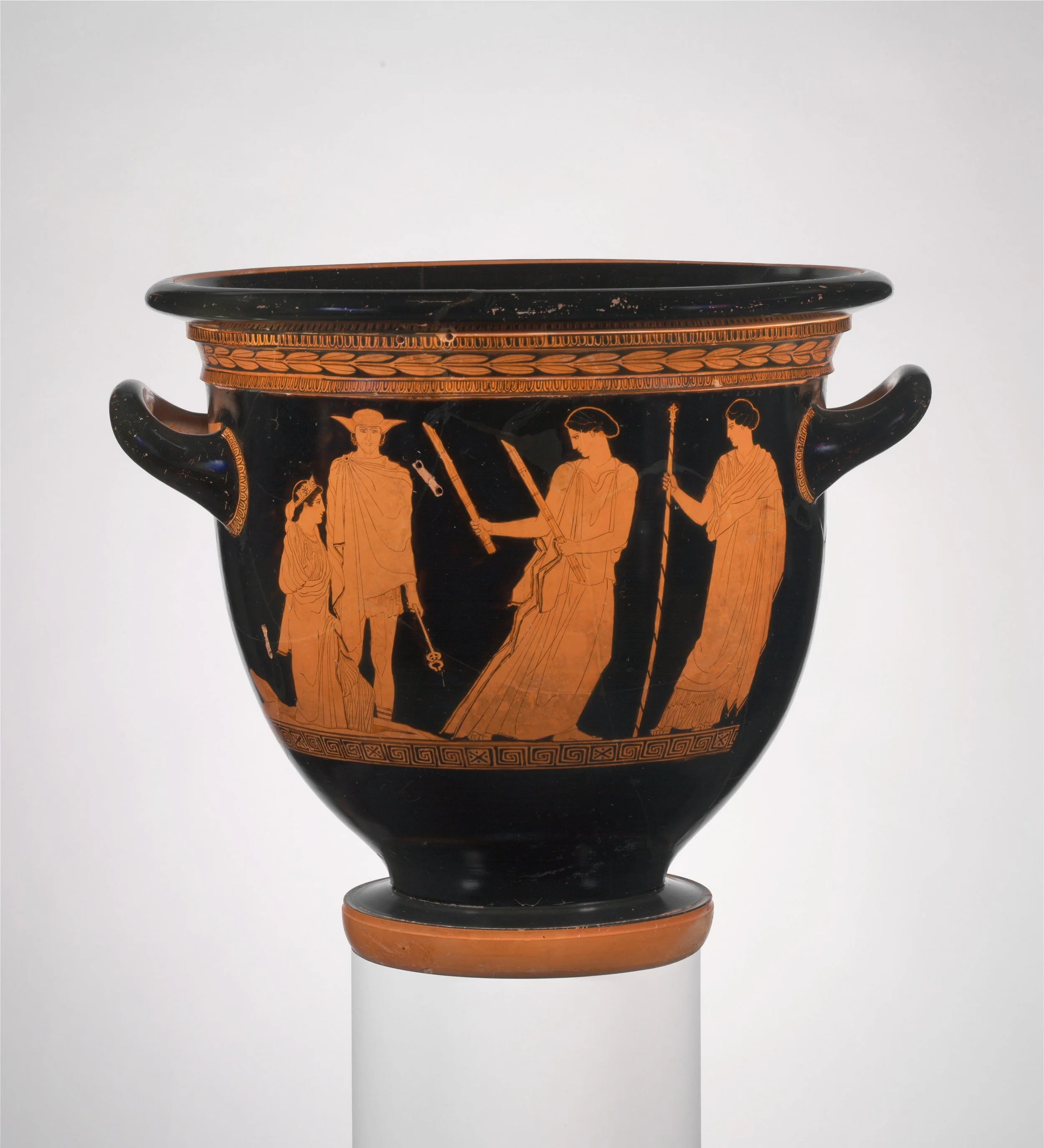
Attributed to the Persephone Painter. 440 BCE Terracotta bell-krater (bowl for mixing wine and water). The Metropolitan Museum of Art, New York City
The story of Persephone’s descent into the underworld deeply resonates with the concept of transformation in human life. The myth varies from one retelling to another, ceaselessly inspiring artists across centuries. However, the main principles of the story stay the same time after time. According to the Homeric Hymn to Demeter,[1] Hades fell in love with virtuous Kore and decided to steal her away from the life she had grown used to, in order to take her as his wife. What stays the same in various tales is that the innocent girl was forcibly snatched from a meadow while picking flowers. That abuse of power did not go unnoticed by Kore’s mother Demeter. Resentment and sorrow after losing her beloved daughter led her to forbid earth to produce any grains, allowing everything to fall into despair, reflecting her emotional anguish. Hades was then forced by Zeus to return Persephone. Unfortunately the young maiden was tricked into eating the pomegranate fruit which bound her to the world of the dead. From then on she had to reside in the underworld for ⅓ of the year, which is how the ancient Greeks explained the changing of seasons.
Different renditions of the myth range from focus on the maternal power and sacred mysteries to modern psychological interpretations focusing on independence, some going as far as framing the tale as romance. In ancient Greece, Kore was depicted as an innocent young girl associated with spring, blooming flowers and abundance of crops. In the High Classical Period she is often shown with sheaves of grain. The red-figure pottery was especially characteristic of that period, preserving the natural orange-red pigment of clay. The terracotta bell-krater, attributed to the Persephone Painter ca. 440 BCE,[2] depicts the bride of Hades as she slowly ascends from an opening in the earth, guided by two gods. Hermes, the patron of travels and transitions, along with Hecate, goddess of crossroads, guide Persephone into the embrace of her mother, reuniting them once again.
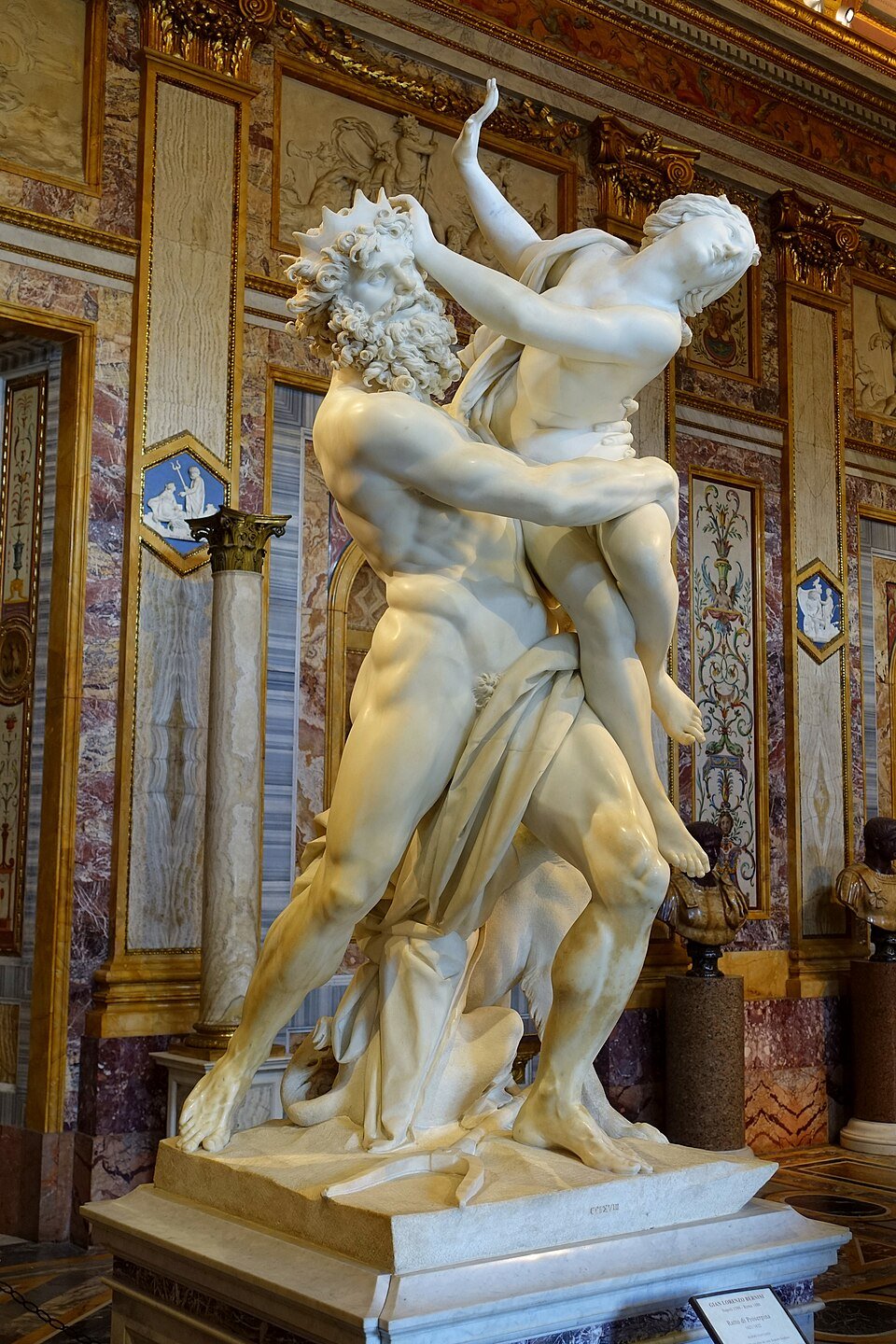
Gian Lorenzo Bernini. 1621-1622. Rape of Proserpina (Ratto di Proserpina). Galleria Borghese, Rome
Renaissance and Baroque artists were more inclined to portray the scene of her abduction to the underworld rather than simply her likeness before the kidnapping took place. What truly captured my attention during research and left me transfixed was a sculpture titled The Rape of Proserpina from 1622.[3] Carved in marble by Gian Lorenzo Bernini, the full-round statue depicts the twisted bodies of Proserpina and Pluto in the middle of a dynamic, violent scene. By simply gazing upon the characters, you can feel the heightened emotions emanating from their facial expressions as well as their body language. The raw and brutal force of Pluto's embrace connects them from the waist down, separated at the top by desperate attempts of resistance from the goddess. The sculpture can be admired from several angles, with each element being meticulously carved by the artist. A detail pointed out by countless art critics is the frailness and almost weightlessness of the skin. The contrast between the soft, delicate, feminine frame of Proserpina struggling in the ruthless embrace of her captor conveys a story worth exploring further.
Circling back to the beginning, I feel that everything is in a constant state of change, whether it's in art or our personal lives. There is a natural succession within which everything around us reinvents itself or is being redefined by others. Persephone is not only a figure who disappears into the darkness for a good portion of the year. She adapts to the world that initially appears to consume her wholly, returning to her earthly realm as a more complex character.
Litteratur
[1] Homeric Hymn to Demeter, trans. Gregory Nagy. https://www.uh.edu/~cldue/texts/demeter.html
[2] Attributed to the Persephone Painter. 440 BCE Terracotta bell-krater (bowl for mixing wine and water). The Metropolitan Museum of Art, New York City
[3] Gian Lorenzo Bernini. 1621-1622. Rape of Proserpina (Ratto di Proserpina). Galleria Borghese, Rome