
A Mouthful of Light
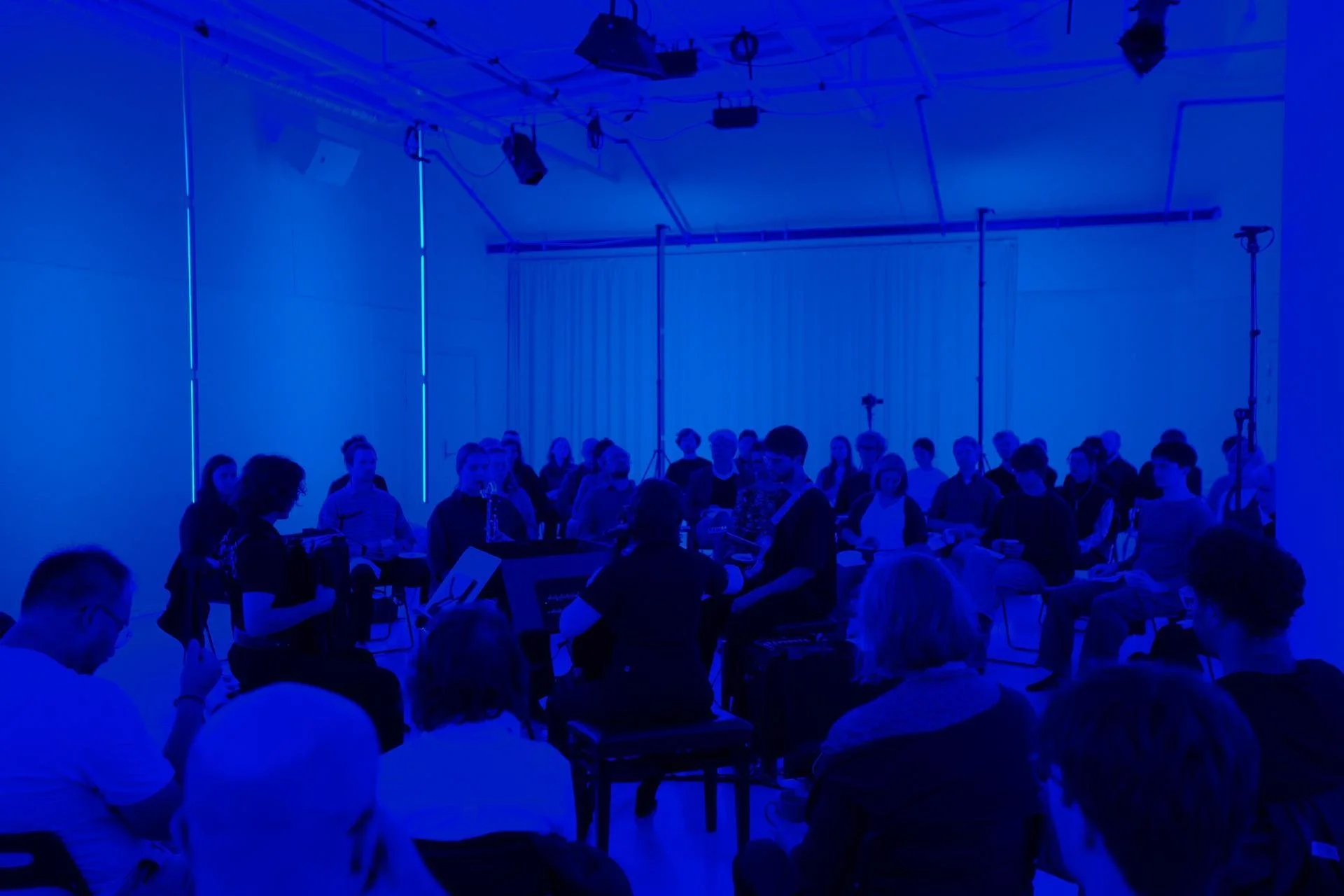
Photo: Nabeeh Samaan, Ultima Festival Oslo 2026
Years ago, in a forest monastery in Sri Lanka, I was late for breakfast. The only food left appeared to be a pile of limes. I could taste the sourness in my mouth just from looking at them. Then I noticed one had been cut open, revealing a strange bright orange flesh. Reluctantly, I sank my teeth into it. It was sweet. My expectations preceded a real experience and made a fool of me.
No surprise Sri Lankan citrus popped up in my mind during a rehearsal of Tine Surel Lange’s Let Us All Sense at Rom for Dans. It was the first time someone invited me into a situation where my sole task was to pay attention to my senses. For 47 minutes straight. The space at Rom for Dans somehow blurs expectations. Is this a concert, a light installation, or a tasting? I sat on a black chair in a blue-lit room. Then I was brought a cup of tea, a plate with a slice of dried mango, and offered a small glass marble from a box. In blue light, the mango could pass for dried fish. The glass marble winked at me.
When the music began, I wondered what to do with all these things? How am I expected to approach them - fast or slow, discreet or loud? I noticed myself chewing with the beat. Then the room turned green, and helpers handed us a small piece of aluminium foil and a new plate with potato chips. The musicians played in front of me while I was balancing a glass marble, the cup of tea, and now two paper plates on my lap, sufficiently self-aware not to drop any of them.
I crumpled the foil. I listened to other people chewing. I found myself looking at other people looking, partly to understand how I was supposed to behave, partly wondering whether several strangers could have similar sensory reactions or associations while experiencing the same things collectively.
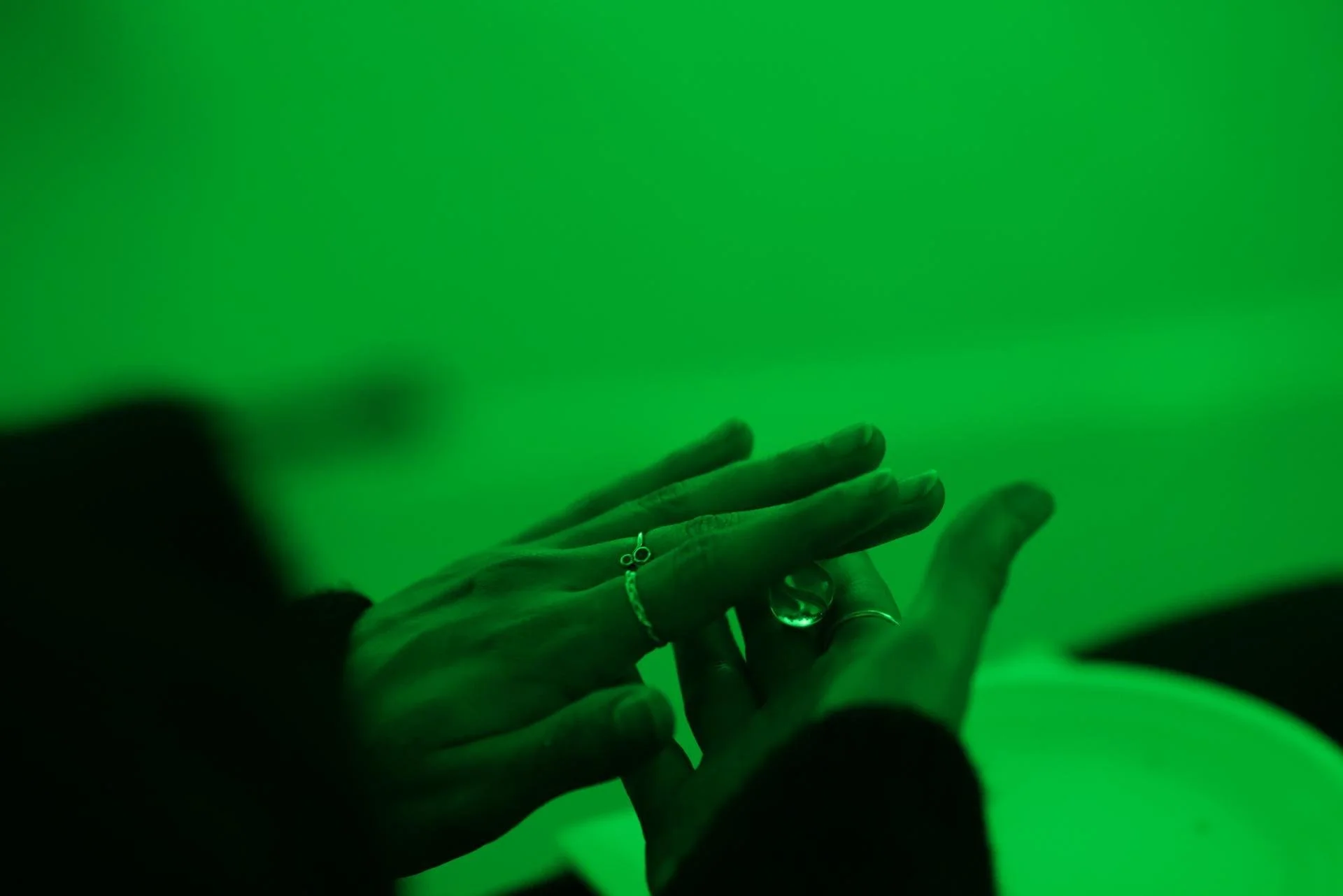
Photo: Nabeeh Samaan, Ultima Festival Oslo 2026
Talking with Tine afterwards, I learned that she had run a workshop where participants sat across a long table, bathing in changing coloured light, rediscovering familiar tastes while sharing their observations. That is how, in plenum, it was discovered that the colour red craves caramel. From time to time I closed my eyes. Multisensory should not mean giving every sense equal priority. Music usually takes my mind away, but this time my other senses became active passengers on the journey. My attention moved seamlessly between here and there, now and then, grounded by the practical task of juggling the plates.
Tine described green as an alien world of little creatures and slime. The composition followed that sensation: the crunch of chips and the crumpling of aluminium foil became part of a world she deliberately could not fully control. I wanted at times to turn my chair away from the musicians. I wanted my eyes to have more air. Simply knowing other people were there might have been enough: alone together, each of us disappearing into a private sensory rabbit hole while moving through the same performance. Instead, the others also became part of what I was sensing. It felt like sensory Lego: every space and social context could rearrange the work into something else, just as coloured light rearranged a slice of mango. At a music festival like Ultima, expectations pull it closer to a concert. Somewhere else, the audience might have behaved completely differently.
Context sometimes arrives before the senses do. I saw green fruit, and my mouth turned sour.